
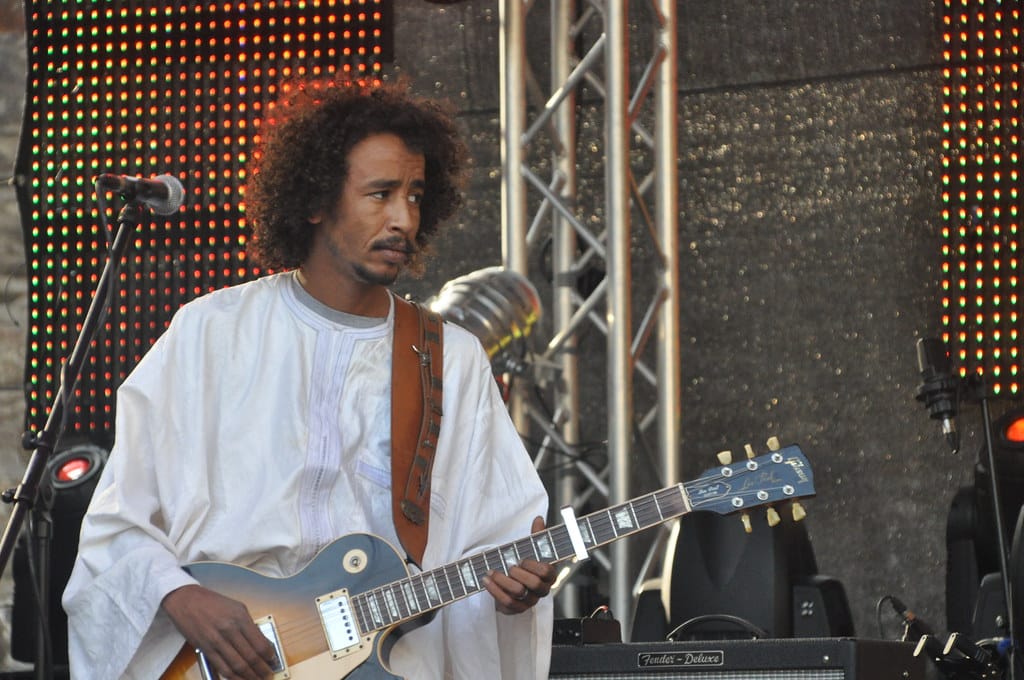
The sound is unmistakable: interlocking electric guitars that circle and repeat, hand-clapped rhythms, voices that call and answer across the stage. Tuareg guitar music — known in Tamasheq as assouf, and to the rest of the world as desert blues — is one of the most distinctive sounds to emerge from Africa in the last half century.
Born in exile
Its modern form took shape in the late 1970s and 1980s among young Tuareg men displaced by drought and conflict, many living in exile in Libya and Algeria. Tinariwen, the group most associated with the style, formed in that world, trading acoustic instruments for electric guitars and writing songs of longing, resistance and home.
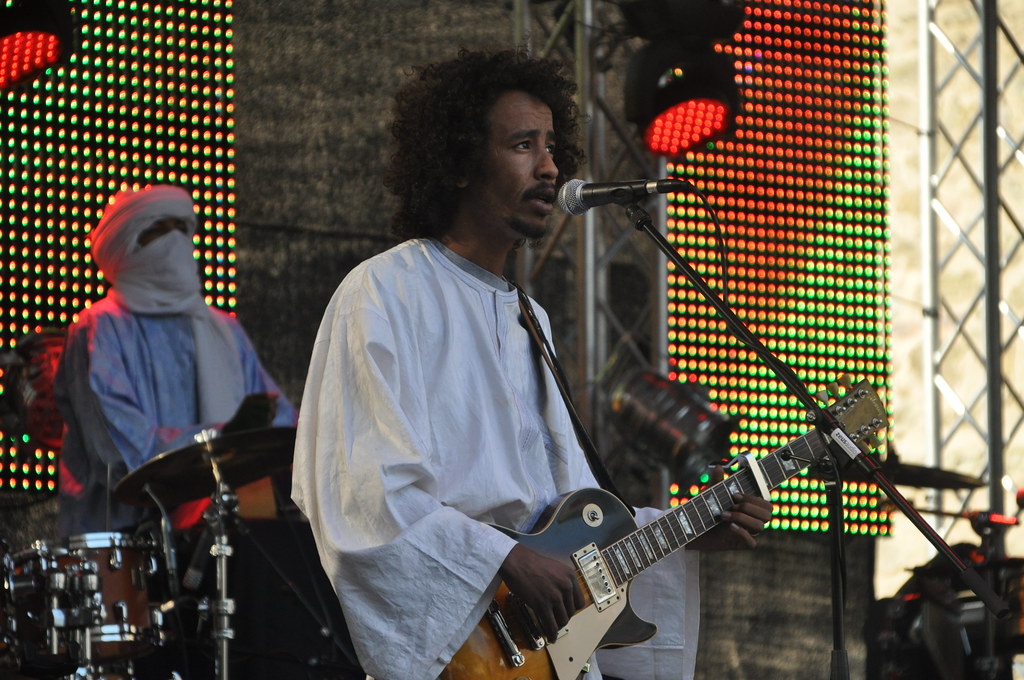
A wider circle
The sound connects to a broader tradition of Sahelian guitar music: the late Malian master Ali Farka Touré, whose music drew comparisons with the Mississippi blues, and younger players like Bombino from Niger, who brought Tuareg rock to festival stages around the world. For years, the Festival au Désert near Timbuktu drew audiences from across the globe into the dunes.
Repetition is the point. The groove is a road you walk until the horizon moves.
What makes desert blues so magnetic is its patience. It does not chase a chorus. It builds a trance, one riff at a time, until the room — or the desert — feels like it is moving with it.