

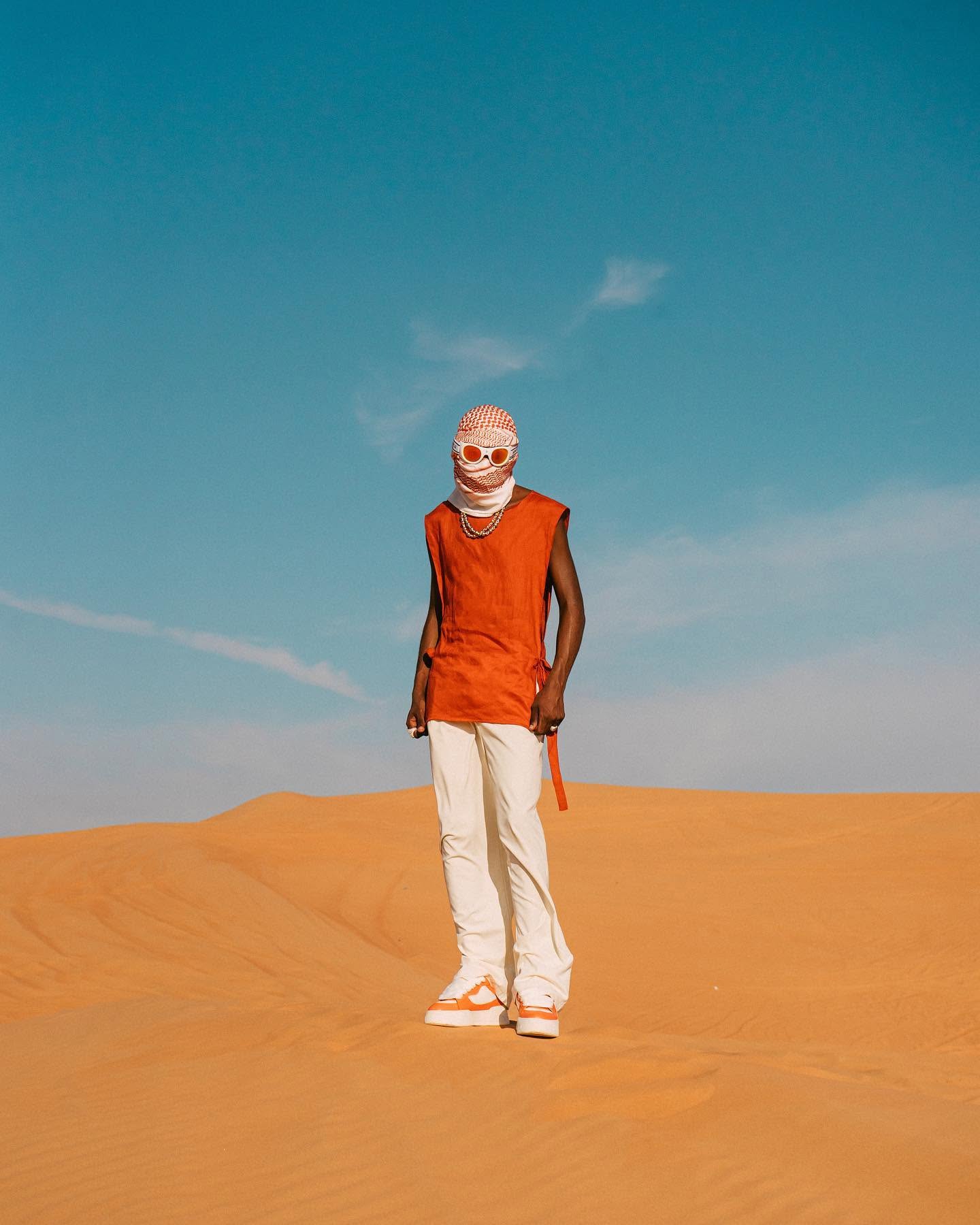
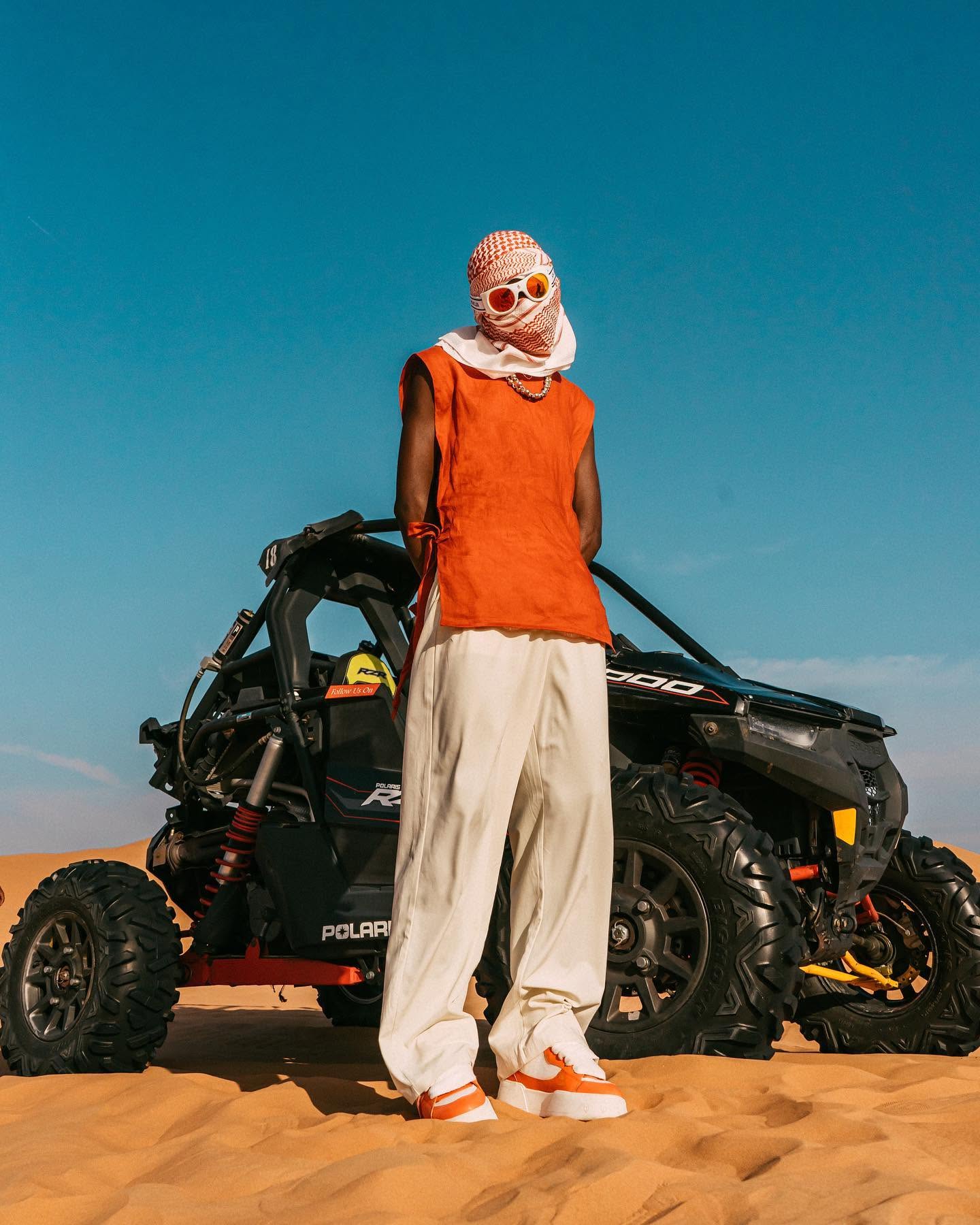
There's something almost cinematic about Musa Keys standing alone in the desert. The sand stretches endlessly behind him, meeting a cloudless blue sky. Dressed in a burnt-orange sleeveless tunic, loose ivory trousers and a red-and-white keffiyeh wrapped around his head, the South African musician looks like a character from a futuristic film. A pair of white Moncler sunglasses, their orange mirrored lenses reflecting the desert sun, completes the picture.
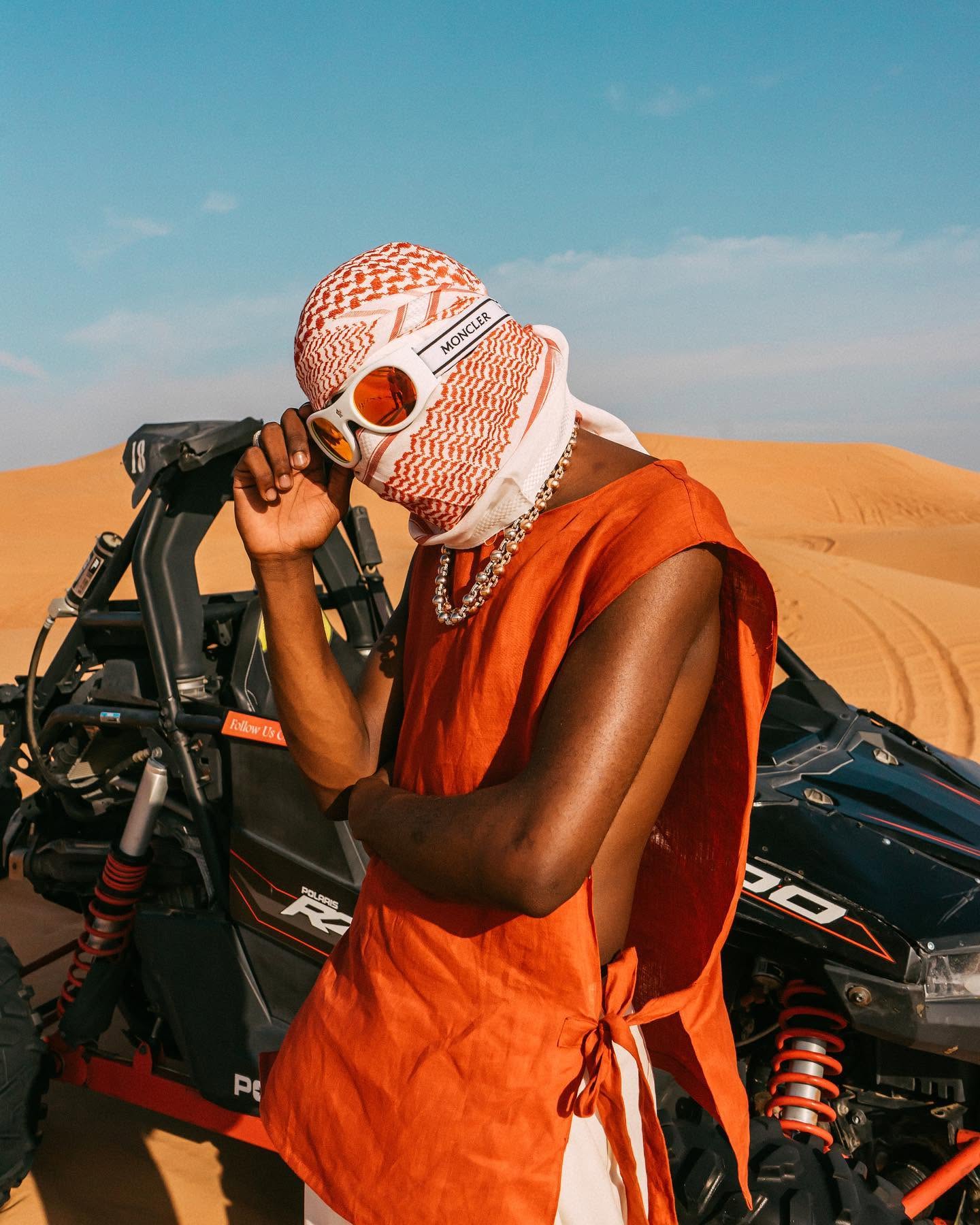

Nearby, a black Polaris off-road buggy provides a sharp industrial contrast to the otherwise untouched landscape. The images are bold, playful and deliberately unconventional. But then, convention has never been particularly interesting to Musa Keys.
Born Musa Makamu, the producer, singer and songwriter has emerged as one of the most recognisable figures in South Africa's amapiano movement. His rise has coincided with the genre's extraordinary journey from the townships of South Africa to dancefloors around the world. Built around deep log drums, hypnotic rhythms and an unmistakable sense of groove, amapiano has become one of the most influential sounds in contemporary African music.
Keys has played his part in that evolution, bringing a melodic sensibility and an instinct for infectious hooks to a sound that continues to reinvent itself. Tracks like Vula Mlomo and Selema (Po Po) helped establish his reputation, while his contribution to Davido's Unavailable introduced his artistry to an even wider international audience.
Yet music is only one part of the picture.
For Keys, image and identity appear inseparable from sound. His approach to fashion is expressive and often theatrical, embracing unexpected combinations, exaggerated silhouettes and a willingness to challenge traditional ideas of menswear. Where some musicians treat clothing as an accessory to their work, Keys makes it part of the performance.


The desert photographs capture this sensibility with particular clarity. The orange tunic moves loosely against the landscape, its asymmetric construction and tied sides adding texture and movement. Silver jewellery brings a touch of glamour, while the keffiyeh and oversized sunglasses create a look that sits somewhere between desert explorer, fashion provocateur and science-fiction protagonist.
It's an unlikely combination, but one that feels entirely intentional.
In another series of images, the setting shifts from open desert to an intimate, stone-walled interior. The saturated oranges give way to a more restrained palette of greys, blacks and whites. Keys wears a cropped grey jacket over a white T-shirt, paired with oversized leather shorts and high-top sneakers. The look is quieter, but no less considered.
The contrast between the two settings reveals something interesting about his visual identity. There's no single uniform or fixed aesthetic. Instead, Keys moves between different expressions of style, borrowing from streetwear, luxury fashion and contemporary African creativity without appearing particularly concerned about where one category ends and another begins.
That fluidity reflects a broader cultural shift. A new generation of African musicians is increasingly shaping conversations not only around music but also around fashion, visual culture and global youth identity. The relationship between these worlds has become more dynamic, with artists using imagery, clothing and performance to communicate ideas that extend well beyond their recordings.
Keys occupies an interesting place within that conversation. His musical roots remain unmistakably South African, but his creative outlook feels expansive. The same curiosity that allows amapiano to absorb new influences and travel across borders is visible in his approach to personal style.
And perhaps that's what makes these images compelling. Beyond the striking colours and carefully styled outfits, there's a sense of freedom running through them. Freedom to experiment, to embrace contradiction and to exist outside the expectations that often accompany success.
In the desert, surrounded by nothing but sand, sky and machinery, Musa Keys appears entirely at ease in the world he's creating.
The music may have introduced him to the world, but he's finding plenty of other ways to make himself heard.